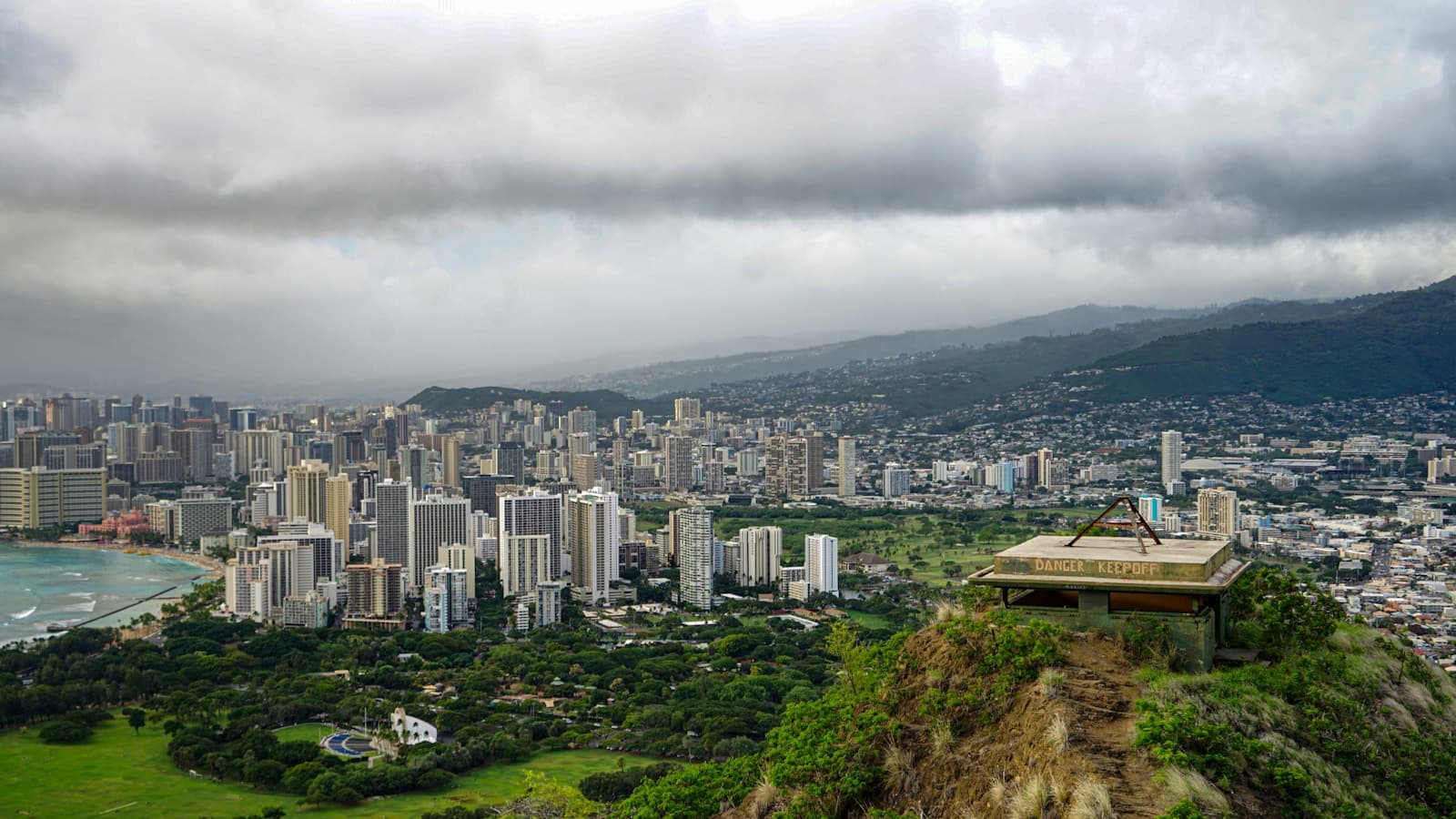
What Affects Rates in Honolulu
- Dense Urban Traffic Concentration: Honolulu's traffic density ranks among the highest in the U.S., with congestion concentrated along the H-1 corridor and downtown. High-risk drivers in these areas face steeper surcharges due to elevated accident frequency in stop-and-go conditions.
- No-Fault PIP System: Hawaii requires Personal Injury Protection (PIP) coverage as a no-fault state, adding $20–$50/mo to base premiums before violation surcharges. High-risk drivers must budget for both PIP mandates and liability increases — typically a combined $200+ monthly minimum.
- Military Population and Rental Vehicle Volume: Honolulu's large military presence and tourist rental traffic contribute to higher uninsured motorist claims, pushing UM/UIM premiums up 15–25% compared to mainland markets. High-risk drivers shopping non-standard carriers see this reflected in bundled policy costs.
- Limited Carrier Competition in High-Risk Market: Hawaii's isolated geography and regulatory environment limit the number of non-standard carriers willing to write high-risk policies. Fewer competitors means less rate variability — shopping across 3–5 specialists is critical to finding the low end of the $180–$350/mo range.
- Points and SR-22 Persistence: Hawaii's 3-year SR-22 filing requirement coincides with the typical point penalty period for DUI and major violations. Rates typically remain elevated for the full 3-year period, with meaningful relief appearing only after the SR-22 is released and points age off the driving abstract.
Compare rates from carriers that work with drivers who have points
Standard carriers surcharge heavily after violations. These specialists price your specific record differently.
Get Your Free QuoteCoverage Recommendations
Cost estimates are based on available industry data and vary by driver profile. These are not insurance quotes.
SR-22 Insurance
Required for DUI, reckless driving, driving without insurance, or license suspension in Hawaii. The SR-22 is a certificate filed by your insurer with the state — not a separate policy — proving continuous liability coverage for 3 years. Any lapse triggers license re-suspension and restarts the 3-year clock.
$25–$50 filing fee + high-risk premiumEstimated range only. Not a quote.
Liability Insurance
Hawaii mandates $20,000 per person / $40,000 per accident for bodily injury and $10,000 property damage. High-risk drivers in Honolulu should consider $100,000/$300,000/$50,000 limits given the city's congested roads and high uninsured driver rates — inadequate coverage after an at-fault accident can trigger personal liability.
State minimum insufficient for urban riskEstimated range only. Not a quote.
Uninsured Motorist Coverage
Hawaii has an above-average uninsured driver rate, and Honolulu's mix of tourists, military, and rental vehicles increases exposure. UM/UIM coverage protects you when hit by an uninsured driver — essential for high-risk drivers who cannot afford out-of-pocket costs after a non-fault accident.
$15–$40/mo additional for UM/UIMEstimated range only. Not a quote.
Non-Standard Auto Insurance
Non-standard carriers specialize in insuring drivers with DUIs, suspensions, lapses, or multiple violations. In Honolulu, these carriers — not standard market insurers — provide the majority of SR-22 and high-risk policies. Expect higher premiums but access to coverage when preferred carriers decline.
$180–$350/mo typical rangeEstimated range only. Not a quote.