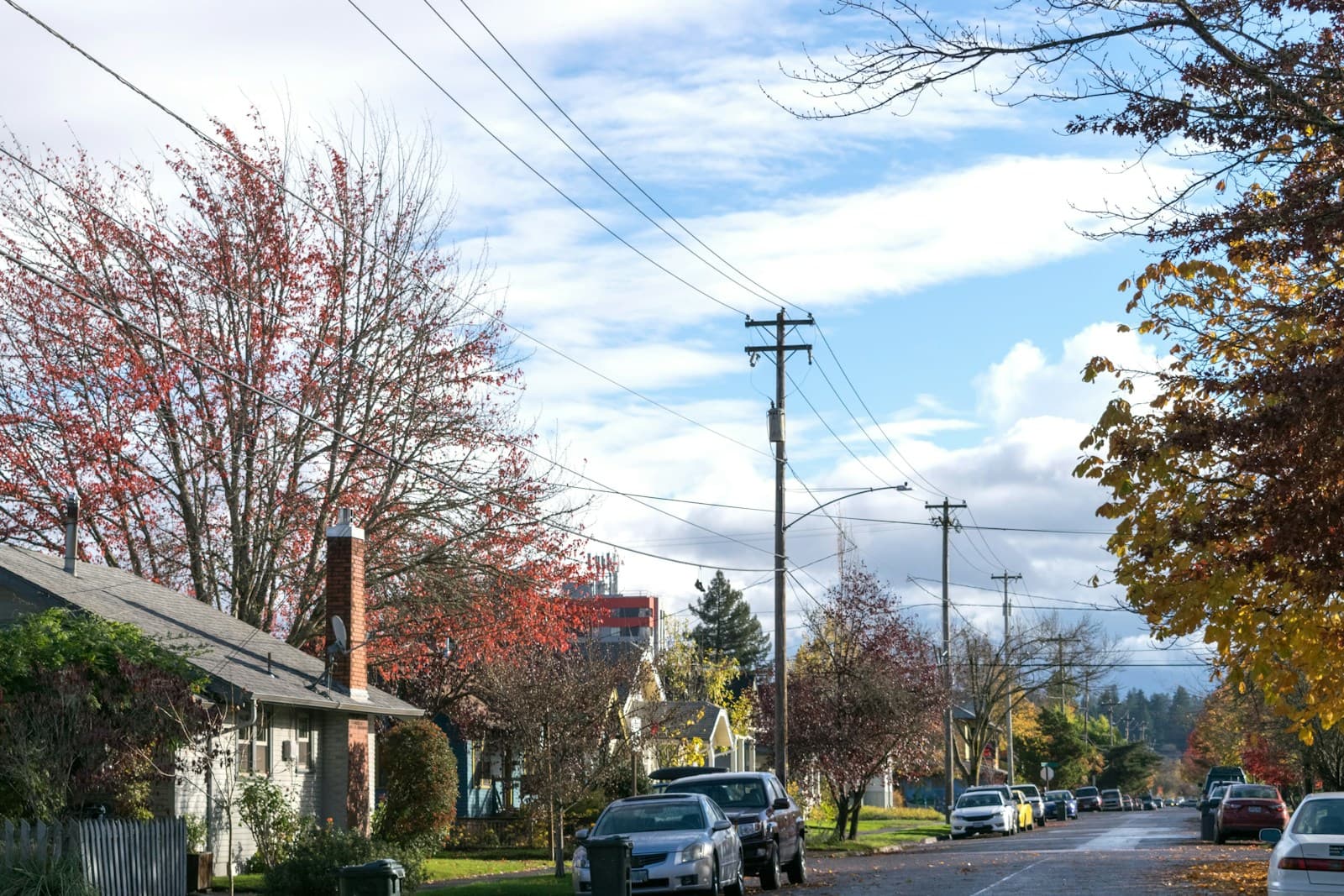
What Affects Rates in Eugene
- University of Oregon Student Population: Eugene's large student population concentrates younger drivers in neighborhoods surrounding campus, particularly near 13th Avenue and Franklin Boulevard. Carriers price violations higher in these ZIP codes due to elevated accident frequency, with at-fault accidents in the university district often triggering steeper surcharges than identical violations in south Eugene.
- Winter Weather on Highway 126 Corridor: The McKenzie Highway corridor east of Eugene sees frequent winter weather events that contribute to higher collision rates for commuters. Drivers with existing points from weather-related accidents face compounding rate pressure, as carriers view winter driving violations as predictive of future claims in this climate zone.
- Cyclist and Pedestrian Density Downtown: Eugene's high bicycle commuter rate and dense pedestrian traffic in the downtown core increase the severity of at-fault violations involving vulnerable road users. A citation for failure to yield to a cyclist in Eugene typically carries a higher insurance surcharge than a comparable moving violation in lower-density areas due to injury claim potential.
- Lane County Court Processing Timeline: Lane County Circuit Court processes traffic violations with typical resolution timelines of 60–90 days for contested citations. This delay affects when violations post to driving records and when carriers apply surcharges, meaning drivers may see rate increases 2–3 months after the citation date rather than immediately.
- Uninsured Motorist Rate Regional Context: Oregon's uninsured motorist rate runs approximately 12–14% statewide, with rural Lane County areas trending slightly higher. Drivers with points who drop uninsured motorist coverage to cut costs expose themselves to significant out-of-pocket risk in a market where one in eight drivers lacks coverage.
Compare rates from carriers that work with drivers who have points
Standard carriers surcharge heavily after violations. These specialists price your specific record differently.
Get Your Free QuoteCoverage Recommendations
Cost estimates are based on available industry data and vary by driver profile. These are not insurance quotes.
Liability Insurance
Oregon requires 25/50/20 minimum limits, but drivers with points should strongly consider 100/300/100 or higher. After an at-fault accident, minimum limits leave you personally liable for damages exceeding your policy—a serious concern in Eugene where pedestrian and cyclist injury claims can exceed $100,000.
$95–$210/mo after violationEstimated range only. Not a quote.
Full Coverage
Full coverage—combining liability, collision, and comprehensive—becomes expensive after points, but dropping it on a financed vehicle risks loan default if the car is totaled. Eugene drivers with violations typically pay $180–$320/mo for full coverage depending on vehicle value and deductible selection.
$180–$320/mo with pointsEstimated range only. Not a quote.
Uninsured Motorist Coverage
With 12–14% of Oregon drivers uninsured, UM coverage protects you when an at-fault uninsured driver hits you—particularly important if you already have points and can't afford another rate increase from an uninsured motorist claim paid under your own collision coverage. Eugene's high cyclist and pedestrian traffic increases the odds of multi-party accidents where coverage gaps emerge.
$15–$35/mo additionalEstimated range only. Not a quote.
Non-Standard Auto Insurance
Non-standard carriers specialize in drivers with multiple violations or point totals approaching suspension thresholds. If you're near the 12-point mark or have 3+ violations in 18 months, non-standard carriers in Eugene may offer the only available coverage, typically at $200–$380/mo for liability-only or minimum coverage policies.
$200–$380/mo for high-point driversEstimated range only. Not a quote.